Edge Tracking
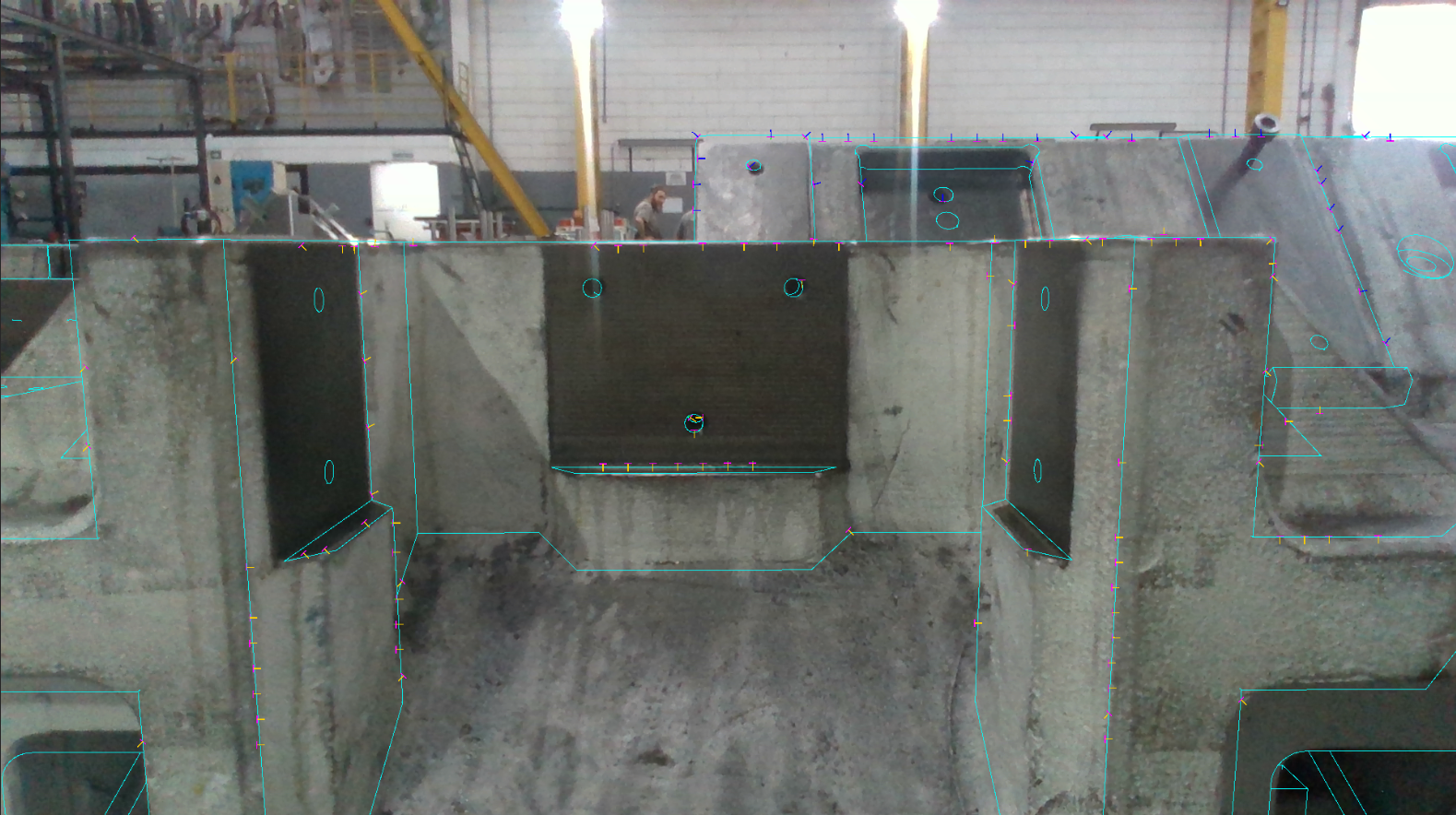
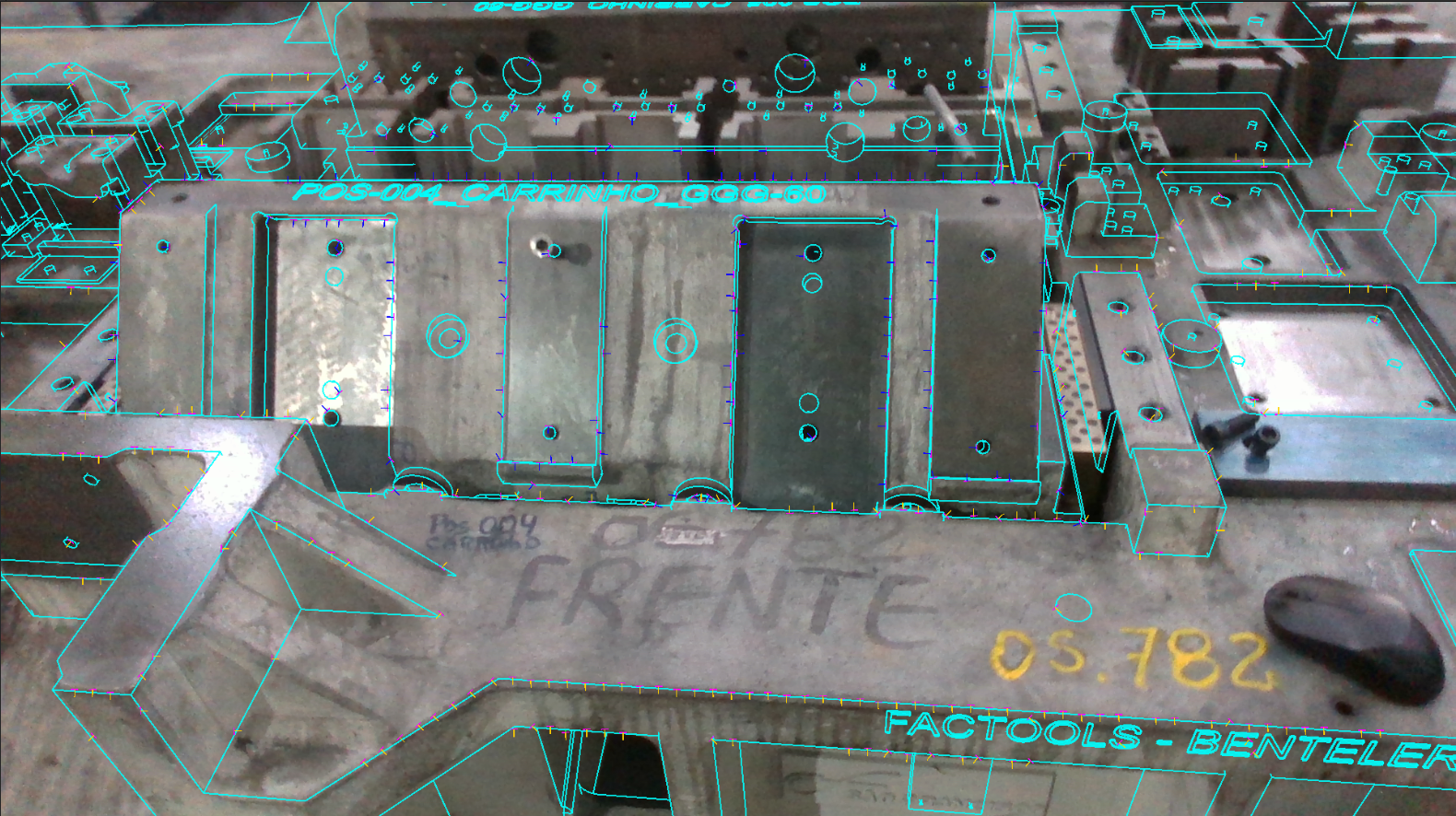
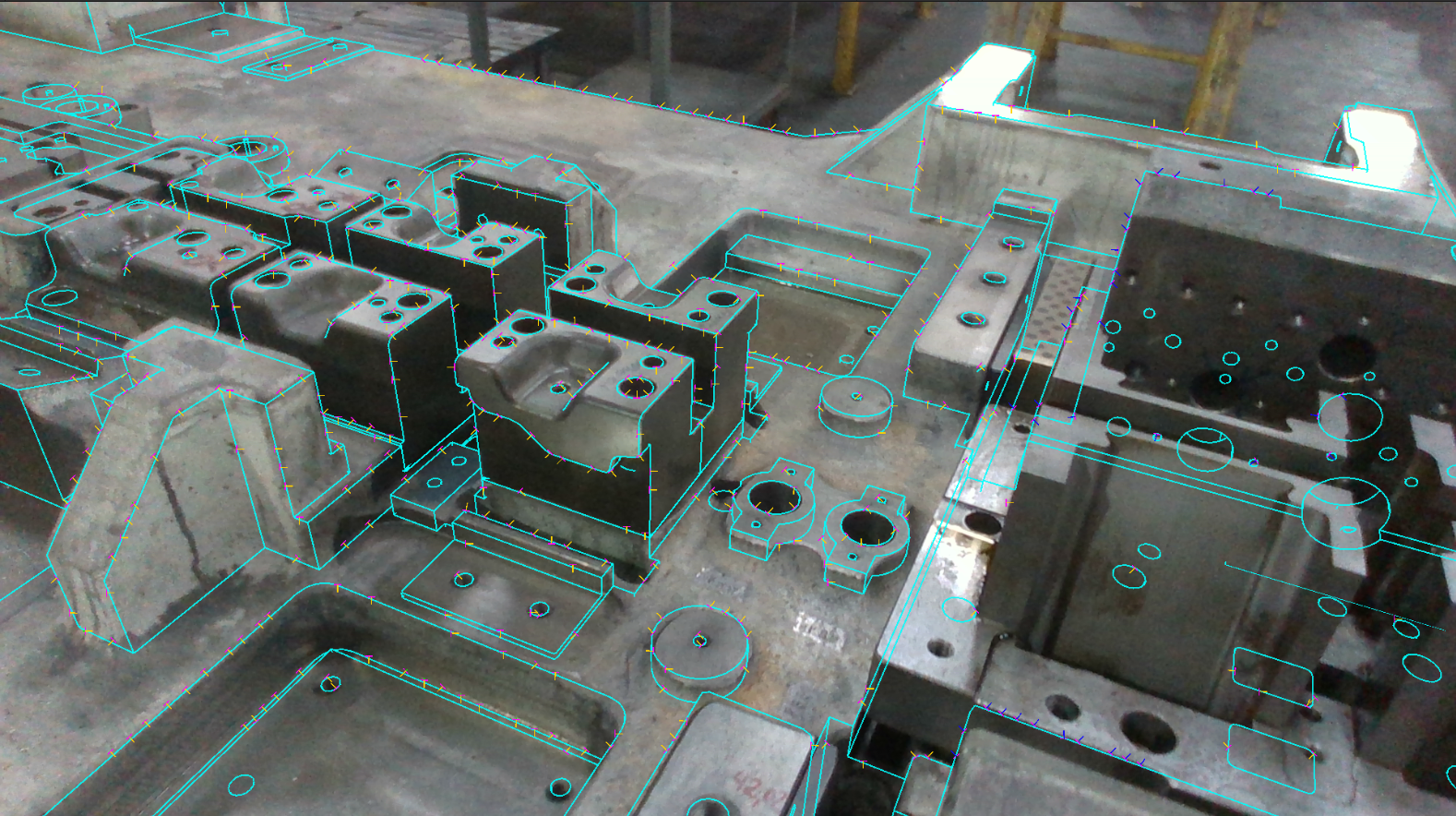
Edge tracking matches the geometric contours of a 3D model against edges found in the camera image. It uses both the object's outer boundary and internal surface edges (creases, sharp features) for robust tracking.
When to Use
Works well for:
- Large machinery, engines, and equipment with lots of internal geometric detail
- Objects with sharp edges, creases, and well-defined geometry
- Partial views of large objects — internal edges remain visible even when the outline isn't fully in frame
- Scenes with cluttered or textured backgrounds — edges are more discriminative than silhouettes
- Low-contrast environments — works with weaker visual contrast than silhouette tracking
- CAD models — the edge structure matches reality closely
Struggles with:
- Smooth, featureless objects (spheres, smooth organic shapes)
- Objects where real edges don't match the 3D model (deformable objects, loose cables)
- Very small objects with few detectable edges
- Fast camera or object movement — more sensitive to motion than silhouette
Configuration
On the TrackedBody component:
- Tracking Method — Select
Edgeto enable
Edge tracking works directly from the mesh geometry — no tracking model generation required. Just assign the mesh and start tracking. The default parameters work well for most cases.
Edge vs. Silhouette
| Aspect | Silhouette | Edge |
|---|---|---|
| What it tracks | Object outline vs. background | Surface edges + outline |
| Setup | Requires pre-generated tracking model | Works directly from mesh — no model generation |
| Background sensitivity | High — needs contrast | Low — works in cluttered scenes |
| Object requirements | Visible outline | Geometric features (edges, creases) |
| Motion tolerance | Very resilient | More sensitive to fast motion |
| Best for | General objects, fast motion | Large machinery, partial views, low contrast |
Quality Metrics
Edge tracking quality is based on:
- Coverage — What fraction of the expected edges are successfully matched. The most important factor — drops when edges leave the frame or become occluded.
- Alignment — How closely the matched edges align with the model. Lower error = better tracking.
Tips
- Model accuracy is critical — edge tracking matches the model's geometric edges against the real object. If the 3D model doesn't closely match the real object's shape, tracking will struggle. CAD models work best because their edge structure matches the manufactured part precisely.
- For objects with both smooth areas and sharp edges, consider combining edge + depth modalities
- Smooth, curved objects with no sharp edges (spheres, organic shapes) are better suited for Silhouette Tracking — edge tracking has nothing to match on featureless surfaces